Plenty of houses in Willow Glen, Cambrian, Evergreen and Berryessa were bought in the 1980s and 1990s for a fraction of what they sell for now. The same is true across the Bay Area, from Sunnyvale ranch houses to Campbell bungalows. That is good news until the owner sits down to plan a sale and asks a simple question: how much of this do I actually keep?
For a lot of long-time South Bay owners, the federal home sale exclusion that covers most of the country doesn’t cover all of the gain. Whatever is left over is taxed twice: once by the IRS, and again by California, which doesn’t give capital gains a lower rate at all. A surviving spouse, an owner who moved out a few years ago, or someone who has to sell early after a job change can each land in very different places under the same rules.
This guide walks through how the gain is calculated, how the exclusion works and when it shrinks, what California adds on top, two rules that matter a great deal to widowed owners, the withholding escrow may take at closing, and how timing and the way you sell fit in.
The rules below come from IRS Publication 523, Selling Your Home and the Franchise Tax Board’s Form 593 instructions. Each has exceptions that turn on your own facts. With a gain the size of most long-held Bay Area houses, an hour with a CPA before you sign a contract is money well spent.
How Your Gain Is Actually Calculated
Your taxable gain is not the sale price minus what you paid. It is smaller than that, often by a lot, and most owners leave money on the table because they don’t track the pieces. The calculation works like this:
- Start with the sale price and subtract your selling expenses. IRS Publication 523 lists sales commissions, advertising, legal fees, loan charges you paid that would normally have been the buyer’s, and other costs of selling. The result is your “amount realized.”
- Work out your adjusted basis: what you paid for the house, plus certain purchase costs, plus the cost of improvements you made over the years.
- Your gain is the amount realized minus the adjusted basis.
Improvements count. Repairs don’t.
Publication 523 gives a long list of improvements that add to basis, including additions such as a bedroom, bathroom, deck, garage or patio; a new roof or siding; a kitchen modernization; new flooring; heating, central air, ductwork and wiring; insulation; a water heater; landscaping, a driveway, a fence, a retaining wall or a pool. A San Jose owner who added a bathroom in 2004, re-roofed in 2012 and replaced the furnace in 2019 may have tens of thousands of dollars of basis they have never written down.
Routine repairs and maintenance, such as patching a leak or repainting a room, generally don’t count. And if you added unpermitted space, the cost can still be an improvement for tax purposes, but the work raises separate questions when you sell; our guide to selling a San Jose house with unpermitted work covers those.
Pull together the closing statement from when you bought, permits pulled on the house, contractor invoices, and old bank or credit card statements for big projects. The City of San José and other Santa Clara County cities keep permit histories, which can help date work you no longer have receipts for. Every documented improvement lowers the gain.
The $250,000 / $500,000 Exclusion
Under Internal Revenue Code section 121, you can exclude up to $250,000 of gain on the sale of your main home, or up to $500,000 if you are married and file jointly. To qualify, Publication 523 sets three tests:
- Ownership: you owned the home for at least 24 months of the five years before the closing date. For a married couple filing jointly, only one spouse needs to meet this.
- Residence: you lived in it as your home for at least 24 months (730 days) of those five years. The time doesn’t have to be in one block. For the full $500,000, each spouse must meet the residence test.
- Look-back: you haven’t excluded gain on another home sale in the two years before this one.
California follows the same exclusion for state income tax, so gain that is excluded federally is generally excluded on your California return as well.
The three-year window after you move out
Because the test looks at the five years before the sale, an owner who moves out still qualifies as long as they lived there for two of those five years. In practice that gives you roughly three years after moving out to close. Owners who moved for a job, moved in with family or downsized and then let the old house sit should check the calendar: miss that window and the exclusion is gone entirely.
If the house was a rental
Renting the house out changes the picture. Publication 523 explains that depreciation you claimed (or could have claimed) can’t be excluded, and periods when the house wasn’t your main home can reduce the exclusion. A former residence that has been a rental for years may not qualify at all. Our landlord guide covers depreciation recapture and 1031 exchanges for that situation.
Short of Two Years? The Partial Exclusion
If you have to sell before you hit the two-year mark, you may still get part of the exclusion. Publication 523 allows a partial exclusion when the main reason for the sale is one of the following:
- A work-related move: you (or your spouse, a co-owner or another resident) took or were transferred to a job at least 50 miles farther from the home than the old work location. This is common in the Bay Area when a job moves to Austin, Seattle or a different campus far away; our relocation page covers selling on that kind of deadline.
- A health-related move: to get or provide medical care for yourself or a family member, or on a doctor’s recommendation.
- An unforeseeable event, which the IRS defines to include the home being destroyed or condemned, a casualty loss from a disaster, a death, a divorce or legal separation, multiple births from one pregnancy, becoming eligible for unemployment compensation, or a change in employment that leaves the household unable to pay basic living expenses.
The partial exclusion is prorated. Roughly speaking, if you met the tests for 12 of the required 24 months, you can exclude up to half the normal amount: $125,000 for a single owner or $250,000 for a married couple. For a house bought recently, that is often enough to cover the whole gain. Divorcing owners should also read our guide to selling a house during a divorce in San Jose, which covers how the exclusion splits between spouses.
What California Adds
This is where Bay Area sellers are often surprised. Federally, gain on a home owned more than a year is a long-term capital gain, taxed at 0%, 15% or 20% depending on income. California has no separate capital gains rate. It taxes the gain as ordinary income, stacked on top of your wages and other income for the year, at the same graduated rates that run from 1% up to 12.3%, plus a 1% Mental Health Services Tax on taxable income over $1 million. That puts the top California rate at 13.3%.
Two more points:
- The 3.8% net investment income tax. The IRS says this tax does not apply to gain you exclude under section 121. But taxable gain above the exclusion is investment income, and if it pushes your modified adjusted gross income over $200,000 (single) or $250,000 (married filing jointly), some or all of it can be taxed an extra 3.8% federally.
- A big gain moves you up the brackets. Because the gain is added to the rest of your income for the year, a sale can push a household that normally pays the 15% federal rate into the 20% bracket, and raise its California rate as well.
The IRS gives long-held gains a lower rate. California doesn’t. Gain above the exclusion is taxed in Sacramento just like a paycheck.
A Worked Example
The figures below are hypothetical, to show how the pieces fit together. They are not an estimate of any real house or a forecast of prices.
| Married, filing jointly | Single owner | |
|---|---|---|
| Sale price | $1,650,000 | $1,650,000 |
| Selling expenses | −$85,000 | −$85,000 |
| Purchase price (1999) | −$400,000 | −$400,000 |
| Documented improvements | −$120,000 | −$120,000 |
| Gain | $1,045,000 | $1,045,000 |
| Section 121 exclusion | −$500,000 | −$250,000 |
| Taxable gain | $545,000 | $795,000 |
In both columns, the taxable gain is taxed federally as a long-term gain, may be subject to the 3.8% net investment income tax, and is taxed again by California as ordinary income. The exact bill depends on the rest of the household’s income, which is why a CPA should run the numbers. But notice two things. Without the $120,000 of documented improvements, both taxable figures would be $120,000 higher. And the gap between the two columns, $250,000 of extra taxable gain, is exactly what a surviving spouse can lose by waiting too long to sell. That is the next section.
Widowed? Two Rules Worth Real Money
When one spouse dies, two separate rules can sharply reduce the tax on a later sale. Both have conditions, and both are easy to miss in the months after a death.
1. The full $500,000 exclusion, for two years
A surviving spouse normally files as single and gets the $250,000 exclusion. Publication 523 lets a surviving spouse keep the $500,000 exclusion if they sell within two years of the spouse’s death, haven’t remarried at the time of the sale, neither spouse took the exclusion on another home in the two years before, and the ownership and residence tests are met. A surviving spouse can count the late spouse’s time owning and living in the home toward those tests.
2. A stepped-up basis on community property
California is a community property state, and that matters a great deal here. Publication 523 explains that when either spouse dies, the total fair market value of the community property becomes the basis of the entire property, including the surviving spouse’s half. In plain terms, decades of appreciation can be wiped out of the calculation at the first death. How the deed was held (community property, community property with right of survivorship, joint tenancy or a trust) affects how this applies, so have a CPA or estate attorney look at the deed and the trust before you sell.
Put together, a surviving spouse who sells soon after a death may owe far less than the example above suggests, and possibly nothing at all. Children who inherit the house later get a similar step-up, which our inherited house guide covers, and our guide to selling a parent’s house for assisted living explains the trade-off between selling during life and holding the house.
The Withholding Escrow May Take
California has its own withholding at closing. Under the Franchise Tax Board’s Form 593 rules, the escrow company generally withholds 3 1/3% of the sales price and sends it to the FTB, unless the seller qualifies for an exemption or chooses the alternative calculation, which withholds based on the estimated gain instead of the price. On a $1.5 million sale, the default works out to about $50,000.
The most common exemption is the one for a principal residence: if you owned and lived in the house as your main home for two of the five years before the sale (the same section 121 test), you certify that on Form 593 and escrow doesn’t withhold. Withholding also isn’t required when the sales price is $100,000 or less. Any amount that is withheld isn’t lost; it is a prepayment credited against your California tax when you file. But it can matter if you were counting on the full proceeds to buy your next home, so ask escrow early which box you will check.
Timing the Sale
You can’t change the rules, but you can often choose when they apply. A few dates worth putting on the calendar:
- Three years after you moved out, when the two-of-five-year test stops working.
- Two years after a spouse’s death, when the surviving spouse’s $500,000 exclusion ends.
- December 31. The gain is generally taxed in the year the sale closes. Closing in January instead of December moves it into the next tax year, which can help if this year’s income is unusually high, for example from a stock vest or a severance payment.
- Your next purchase. If you are 55 or older and buying another California home, the sale price also matters for property tax. Our Prop 19 over-55 guide explains how to carry your low assessed value with you.
Some sellers also ask about seller financing, where the buyer pays over time. An installment sale can spread the gain across several tax years, but it comes with its own risks and tax rules. That is a conversation for a CPA before you agree to anything.
Does a Cash Sale Change the Tax?
No. The tax rules are exactly the same whether you list with an agent or sell to a cash buyer. What changes is the inputs. A listed sale usually brings a higher price and also commissions and prep costs, which count as selling expenses. A cash sale usually brings a lower price and fewer costs. Our breakdown of cash buyer vs. realtor in San Jose shows how to compare the two on what you actually net, and the tax should be part of that comparison, not an afterthought.
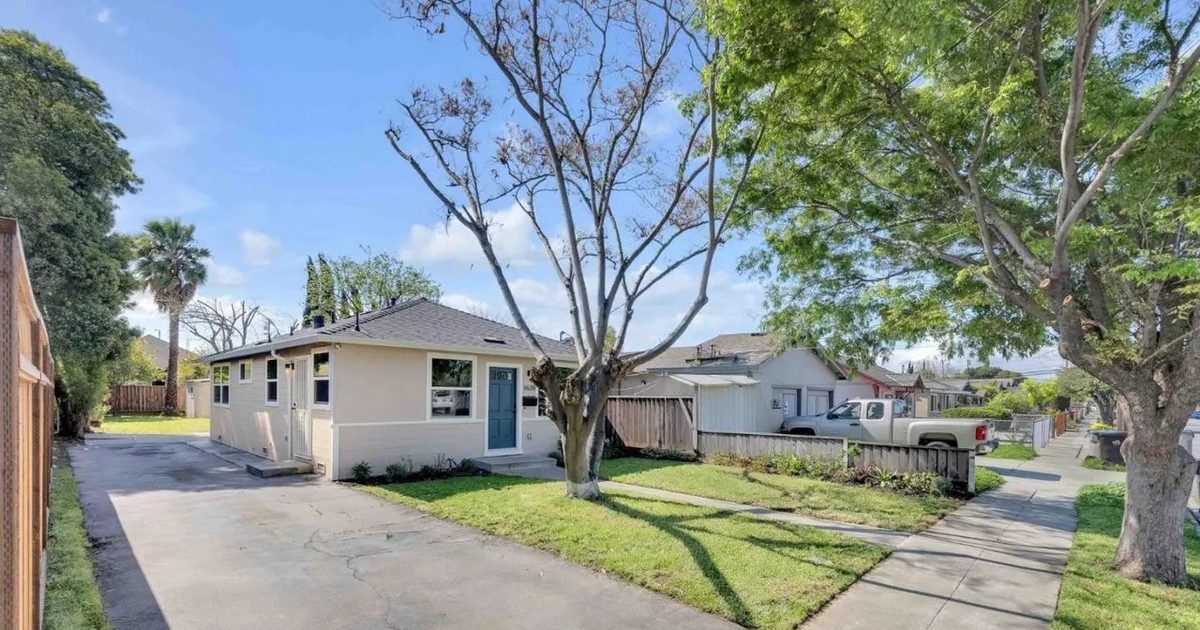
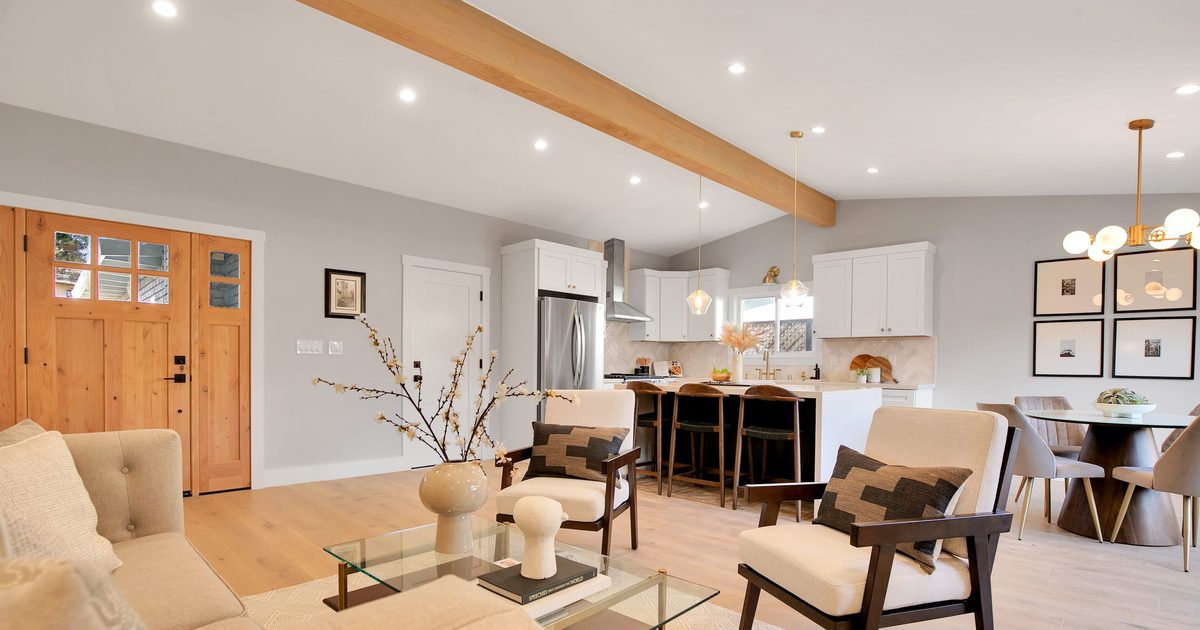
Where a cash sale helps with taxes is control over the closing date. When the deadline that matters is the end of a two-year window, the third anniversary of a move or December 31, a sale that doesn’t depend on a buyer’s loan approval or repair requests can close on the date you pick. We buy houses as-is across San Jose and the Bay Area, with no repairs, cleanout or showings, and we pay the closing costs. The Secret Garden House in Sunnyvale, pictured above, was bought from an owner who needed the equity on a set schedule to move into a new build. How it works walks through our steps.
We are not tax advisors, and we won’t tell you what you will owe. If your house is in good shape and you have time, listing may well net you more, and we will say so. What we can do is give you a written offer to compare and a closing date to plan the tax year around.
A Simple Order of Operations
Frequently Asked Questions
How much capital gains tax will I pay when I sell my San Jose house?
It depends on your gain and the rest of your income. Your gain is the sale price minus selling expenses, minus what you paid plus the cost of improvements. If you owned and lived in the house for two of the last five years, you can exclude up to $250,000 of that gain, or $500,000 if married filing jointly. Anything above the exclusion is taxed federally as a long-term capital gain at 0%, 15% or 20%, may owe the 3.8% net investment income tax, and is taxed again by California as ordinary income at rates up to 13.3%. A CPA can run your exact numbers.
Does California have its own home sale exclusion?
California follows the federal exclusion of $250,000 for a single owner or $500,000 for a married couple filing jointly, so gain excluded on your federal return is generally excluded on your California return too. What California doesn’t have is a lower rate for capital gains. Gain above the exclusion is taxed as ordinary income, at the same graduated rates as wages, up to 13.3%.
I’m widowed. Can I still exclude $500,000 when I sell?
Possibly. IRS Publication 523 lets a surviving spouse use the $500,000 exclusion if the house is sold within two years of the spouse’s death, the survivor hasn’t remarried, neither spouse used the exclusion on another home in the prior two years, and the ownership and residence tests are met. Separately, when a spouse dies, community property in California generally gets a new basis equal to its full market value, which can shrink the gain a great deal. How title was held matters, so have a CPA review the deed.
Will escrow hold back California tax from my sale?
It can. Under the Franchise Tax Board’s Form 593 rules, escrow generally withholds 3 1/3% of the sales price unless an exemption applies. If the house was your principal residence under the same two-of-five-year test, you certify that on Form 593 and nothing is withheld. Sellers who don’t qualify can choose an alternative calculation based on the estimated gain. Anything withheld is credited against your California tax when you file.
Does selling to a cash buyer change my capital gains tax?
No. The tax rules are the same however you sell. The price and your selling expenses determine the gain, so compare what you would net from a listing and from a cash offer. What a cash sale can give you is control over the closing date, which helps when a deadline matters, such as the end of the two-year surviving-spouse window or December 31. Peachtree Homes buys as-is across San Jose and the Bay Area and pays the closing costs. Call (408) 549-7183.