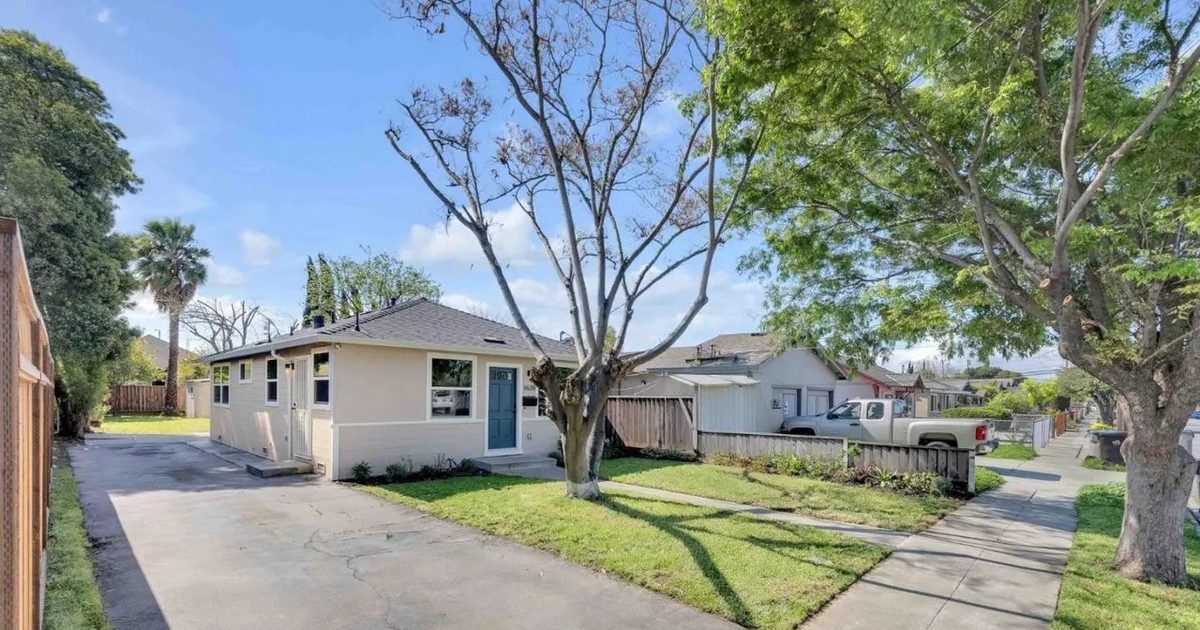
It usually starts with a fall, a hospital stay, or a doctor saying the word “memory.” A parent who has lived in the same Willow Glen, Cambrian or Evergreen house for forty years can’t safely live alone any more, and the family is suddenly comparing assisted living and nursing homes while the house sits empty. In Santa Clara County that house is often the largest thing your parent owns, and the most obvious way to pay for their care.
Selling it is not as simple as calling an agent. Before anyone signs a listing agreement, a family needs to answer four questions. Who has the legal authority to sell? Will selling help or hurt Medi-Cal eligibility? What does it do to the capital gains bill? And is selling now actually better than keeping the house? The answers changed this year, because California brought back the Medi-Cal asset limit on January 1, 2026.
This guide walks through each question for San Jose and Santa Clara County families: powers of attorney, trusts and conservatorships; how Medi-Cal treats the house before and after a sale; estate recovery; the federal tax rule written for owners who move into care; and how the realistic ways to sell compare.
Medi-Cal eligibility, estate recovery and capital gains all turn on facts that differ from family to family, and the rules below have specific exceptions. Before you sell a parent’s house, talk to a California elder law attorney and a CPA. California Advocates for Nursing Home Reform (CANHR), a statewide nonprofit, publishes plain-English fact sheets on the Medi-Cal rules, and the Department of Health Care Services asset limit FAQ is the official source.
The First Question: Sell, Keep or Wait?
Families tend to assume the house has to be sold the moment a parent moves into care. Sometimes it does. Often it doesn’t, and selling too early or too late can both cost real money. The decision usually comes down to how care is being paid for:
- Your parent is paying privately from savings, a pension or long-term care insurance, and the savings will run out. Here the house is the reserve that keeps care going, and the question is mainly when to sell and how to net the most.
- Your parent is on Medi-Cal, or will need it, usually for nursing-home care. Here the house can be an exempt asset while it is held and countable cash once it is sold. Selling without a plan can make a parent ineligible overnight.
- A spouse is still living in the house. Then the house is usually not the thing to sell at all, at least not yet. Medi-Cal treats a home with a spouse in it differently, and the spouse has their own rights.
While your parent holds the house, Medi-Cal may not count it. Once it is sold, the money in the bank does count.
Carrying costs matter too. An empty San Jose house still needs property tax, insurance, utilities and someone checking on it. Many homeowners’ policies treat a vacant house differently, so call the insurer the month your parent moves out and ask whether the policy still covers an unoccupied home. A slow leak in a house nobody is living in can do a lot of damage before anyone notices.
Who Can Sign for Your Parent
A house can only be sold by its owner or by someone with legal authority to act for the owner. With a parent moving into care, that usually means one of four routes.
1. Your parent signs
If your parent still has the mental capacity to understand the sale, they can sign the listing or purchase contract and the grant deed themselves. They don’t need to come back to the house: a mobile notary can meet them at the assisted living community or nursing home. This is the cleanest route when it is available, and it is worth acting on early if a parent’s memory is declining.
2. A durable power of attorney
Many parents signed a power of attorney for finances when they made their will or trust. Under California Probate Code section 4124, a power of attorney is durable (it keeps working after the parent loses capacity) only if it says so, with wording such as “This power of attorney shall not be affected by subsequent incapacity of the principal.” Find the document and read that line before you rely on it. Also check what it actually authorizes. A broad financial power usually covers real estate, but a narrow one may not.
Expect the title company to review the power of attorney closely. Escrow and title companies commonly require the original to be recorded with the Santa Clara County Clerk-Recorder along with the deed, and they may ask for a statement that it hasn’t been revoked. One more limit: a power of attorney ends when the parent dies. If your parent passes away before closing, the agent can no longer sign, and the sale has to continue through the trust or probate.
3. A living trust
If the house was deeded into a revocable living trust, the trustee signs. That is usually your parent while they are able, and a successor trustee once the trust’s incapacity terms are met. Many trusts require a letter from one or two doctors to show incapacity. Read the trust itself, because the wording decides when the successor steps in. A trust avoids court involvement during life and after death, which matters for estate recovery (below). Note that holding the house in a trust doesn’t hide it from Medi-Cal: CANHR points out that assets in a revocable trust are counted the same as if your parent owned them directly.
4. A conservatorship, when there are no documents
If your parent can no longer sign and there is no durable power of attorney and no trust, someone has to petition the Santa Clara County Superior Court to be appointed conservator of the estate. That takes time and money, and the sale itself is supervised. Under Probate Code section 2541 a conservator may sell when the sale is needed to pay for the parent’s care or debts, or is in their best interest. For the parent’s own home, section 2540 adds a step: before committing significant resources to the sale, the conservator must tell the court the home is to be sold, say whether the parent supports or opposes it, and explain why alternatives such as in-home care aren’t available. Plan for a court timeline, not a market one.
Look for a trust binder, a power of attorney, the most recent property tax bill and any mortgage or reverse mortgage statement. Those four documents tell you who can sign, what is owed and what the county thinks the house is worth for tax purposes. If none of them exist and your parent can still sign, ask an elder law attorney about putting a power of attorney in place now. It is far cheaper than a conservatorship later.
Medi-Cal and the House in 2026
For a few years, California Medi-Cal did not look at assets at all. That ended on January 1, 2026. According to the Department of Health Care Services (DHCS), Medi-Cal again counts assets for people who are 65 or older, have a disability, or live in a nursing home, and the limits are:
| Period | One person | Each extra household member |
|---|---|---|
| Jan 1, 2026 – June 30, 2027 | $130,000 | +$65,000 |
| From July 1, 2027 | $21,000 | $31,000 for two people, then +$1,550 |
That July 2027 drop is the date to plan around. A sale that leaves your parent comfortably under $130,000 today could leave them far over the limit in 2027.
The house is usually exempt while your parent owns it
DHCS doesn’t count your parent’s main home. If they move into a nursing home, the home still doesn’t count if they plan to return to it, or if their spouse or a dependent relative lives there. Second homes and rental properties do count.
Sale proceeds are not exempt
This is the trap. Once the house is sold, the proceeds are cash, and cash counts. A San Jose house that sells for well over a million dollars turns an exempt asset into a countable one many times the limit. Your parent may then pay privately until the money is spent down. DHCS lists acceptable ways to spend down, including paying medical bills, paying rent or a mortgage, fixing the home and paying off debts. Whether that is a problem or simply the plan depends on your family. For a parent paying privately for good care in the South Bay, using the house this way may be exactly right. For a parent already on Medi-Cal, a sale without advice can cost them their coverage.
Giving the house away is not a shortcut
Families sometimes ask about deeding the house to a child. DHCS says Medi-Cal now looks back 30 months from the date a person enters a nursing home for assets given away for less than they are worth. Transfers made on or after January 1, 2026 can trigger a penalty that delays nursing-home coverage. Selling for full value, or transferring to a spouse or to a blind or disabled child, does not. Deeding a house to a child also has tax and Prop 19 consequences. Don’t do it without an elder law attorney.
Estate Recovery: What Happens Later
The second reason families hesitate to sell is the fear that “Medi-Cal will take the house.” California’s rules on this narrowed a lot in 2017. For Medi-Cal members who died on or after January 1, 2017, DHCS says estate recovery:
- Applies only to benefits received on or after the member’s 55th birthday;
- Is limited to assets that go through probate and that the member owned at death;
- Covers nursing facility services, home and community-based services, and related hospital and drug costs, not every Medi-Cal service; and
- Can be waived for substantial hardship if the family applies within 60 days of the claim letter.
Two things follow. A house held in a living trust passes outside probate, so it generally isn’t reached. And if the house is sold during your parent’s life and the money is spent on care, there may be little left at death for a claim to reach anyway. The person handling the estate must also notify DHCS within 90 days of a Medi-Cal member’s death. Estate planning here is legal work. The point for a seller is simply that “Medi-Cal will take the house” is no longer true by default, and it shouldn’t drive a rushed sale.
Capital Gains and the Care-Facility Rule
A San Jose house bought decades ago carries a large gain. Federal law lets an owner exclude up to $250,000 of gain on a principal residence, or $500,000 for a married couple filing jointly, if they owned and lived in it for at least two of the five years before the sale (IRC section 121). Normally that means a parent who moves out has about three years to sell before losing the exclusion.
Section 121 has a provision written for exactly this situation. Under subsection (d)(7), if an owner becomes physically or mentally incapable of self-care and lived in the house for at least one year during the five-year window, any time they spend in a state-licensed facility, including a nursing home, counts as living in the house. In practice that can stretch the window for families who aren’t ready to sell right away. A CPA should confirm that your parent qualifies and that the facility is licensed.
The step-up trade-off
There is a second tax rule pulling the other way. When a house passes to heirs at death, its cost basis generally resets to market value on the date of death, the “stepped-up basis” that our inherited house guide explains. If the gain is far above the $250,000 or $500,000 exclusion, holding the house can save heirs a large capital gains bill. Selling during life can leave the parent with taxable gain and countable cash. Neither answer is right in every case: it depends on the size of the gain, how care is paid for, and how long the money has to last. This is the single most valuable hour to spend with a CPA.
Reverse Mortgages and Property Tax
Two more things to check before you set a timeline.
A reverse mortgage has its own clock. An FHA-insured reverse mortgage (HECM) can be called due once the borrower has been out of the house for more than 12 consecutive months for health reasons. If your parent has one, a move into care starts that clock. Our notes on what happens when a reverse mortgage comes due cover the servicer’s notices and how the payoff works.
Prop 19 cuts both ways. If a parent who is 55 or older sells and buys a smaller California home instead of moving into care, they may be able to carry their low assessed value with them; see our Prop 19 over-55 guide. If the family plans to keep the house and a child inherits it, the parent-child rules usually reassess the house unless the child moves in. Our Prop 19 inheritance guide walks through the math. In Santa Clara County a reassessment on a long-held house can multiply the tax bill, and that changes the case for keeping it.
Your Options Side by Side
| List with an agent | Sell as-is to a cash buyer | Keep and rent it out | Hold until inheritance | |
|---|---|---|---|---|
| Best when | The house shows well and care is funded for months | Care bills are due now, or condition, distance or a cleanout is the obstacle | Rent covers care costs and someone can manage it | Care is funded another way and the gain is far above the exclusion |
| Typical timing | Prep, listing, escrow: often months | Days to a few weeks, on your date | Ongoing | Indefinite |
| Repairs and cleanout | Usually needed for top price | None | Needed to rent legally and safely | Upkeep while vacant |
| Medi-Cal effect | Proceeds become countable cash | Proceeds become countable cash | Rent is income; ask how the house is treated | Exempt if the home rules are met |
| Main risk | Carrying costs and delays while care bills arrive | Lower price in exchange for speed and certainty | Landlord duties, tenant rules, vacancy | Vacant-house risk, reassessment for heirs |
Renting out a San Jose house means taking on California tenant law, and our landlord guide covers what that involves, including selling with tenants later. For the fee-and-commission math behind the first two columns, see cash buyer vs. realtor in San Jose or our compare options page.
Where a Cash Sale Fits
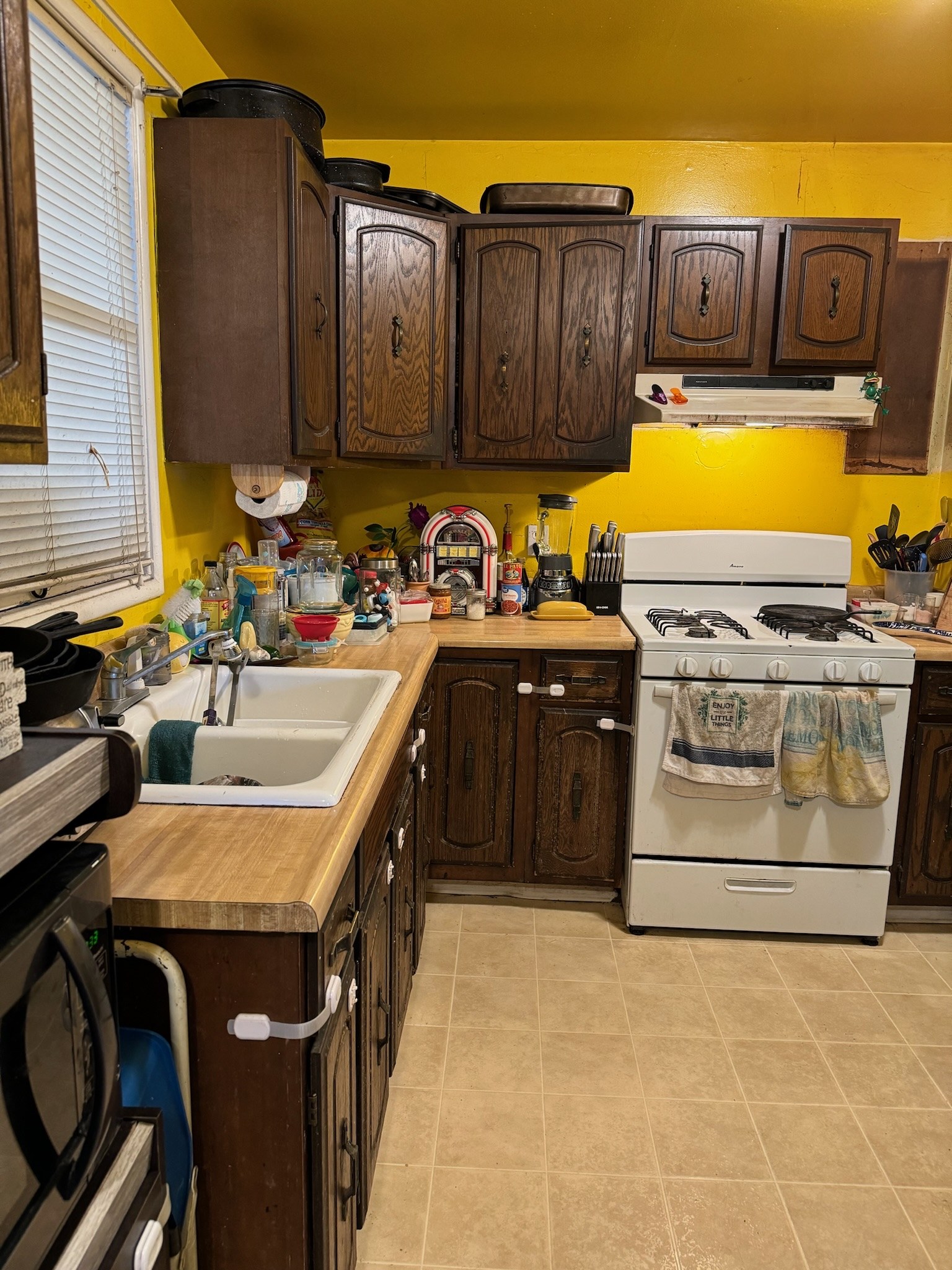
A parent’s house that comes up for sale because of a move into care has some things in common. It was lived in for a long time, the kitchen and baths are often original, the garage holds fifty years of belongings, and the family member in charge may live in another state. Getting that house market-ready while also choosing a care facility and keeping up with monthly bills is a lot for one person.
We buy houses in that condition across San Jose and the Bay Area, as-is, with no repairs, no cleanout and no showings. We work with whoever has authority to sign, whether that’s the parent at the facility, an agent under a power of attorney, a successor trustee or a court-appointed conservator. We set the closing date around the care plan, not the other way around. The Calico House in San Jose, the one with the oak kitchen in the photo above, is an example of the kind of house we buy as it stands. How it works walks through our steps, and our downsizing page covers parents who are moving somewhere smaller rather than into care.
We are not the right answer for everyone. If the house is in good shape and care is funded for the months a listing takes, listing will usually net your parent more, and we will tell you that. If your parent is on Medi-Cal, get advice on what a sale does to their eligibility before you take any offer, including ours.
A Sequence That Protects Your Parent
Frequently Asked Questions
Can I sell my parent’s house with a power of attorney in California?
Usually, yes, if it is a durable power of attorney that covers real estate. Under California Probate Code section 4124, a power of attorney keeps working after your parent loses capacity only if it says so, for example “This power of attorney shall not be affected by subsequent incapacity of the principal.” The title company will review it and commonly requires it to be recorded with the Santa Clara County Clerk-Recorder at closing. A power of attorney ends when the parent dies, so the sale then continues through the trust or probate. Confirm your document with an elder law attorney.
Does selling the house affect my parent’s Medi-Cal?
It can. Since January 1, 2026, Medi-Cal counts assets for people 65 and older and nursing-home residents, with a limit of $130,000 for one person through June 30, 2027, dropping to $21,000 on July 1, 2027, according to DHCS. Your parent’s main home generally doesn’t count, including in a nursing home if they plan to return or a spouse or dependent relative lives there. The cash from a sale does count, so talk to an elder law attorney before selling if your parent is on Medi-Cal or may need it.
Will my parent lose the capital gains exclusion if they have been in a nursing home for years?
Not necessarily. Normally the owner must have lived in the house for two of the five years before the sale. But IRC section 121(d)(7) says that if an owner becomes physically or mentally incapable of self-care and lived in the house for at least one year of that five-year period, time spent in a state-licensed care facility, including a nursing home, counts as living in the house. Have a CPA confirm the details.
Can Medi-Cal take my parent’s house after they die?
For Medi-Cal members who died on or after January 1, 2017, DHCS limits estate recovery to assets that go through probate, and only for certain long-term care costs received at age 55 or older. A house held in a living trust passes outside probate, and families can ask for a hardship waiver within 60 days of the claim letter. The rules have exceptions, so check your parent’s situation with an elder law attorney.
Will Peachtree Homes buy a house while my parent is in assisted living?
Yes. We buy houses as-is across San Jose and the Bay Area, with no repairs, cleanout or showings, and we work with whoever has authority to sign: your parent, an agent under a power of attorney, a trustee or a conservator. A mobile notary can go to the care facility. We set the closing date around the care plan. If listing would clearly net your parent more, we will say so. Call (408) 549-7183.