A house fire does not end when the trucks pull away. For most San Jose homeowners it is the start of a second, slower emergency: an adjuster on the phone, a mortgage lender whose name is suddenly on the insurance check, a property tax bill that still assumes the house is whole, and a kitchen, roof or back bedroom that nobody can live in. Somewhere in the middle of all that, a lot of owners start asking a question they never expected to ask: should we just sell it?
Sometimes the answer is no. A contained kitchen fire on a house you love, with good coverage and a contractor you trust, is usually worth repairing. But for a rental you were already tired of, a parent’s house you inherited, a place you cannot afford to carry for a year of reconstruction, or a loss where the claim is smaller than the damage, selling can be the cleaner exit. The trouble is that the insurance rules, the property tax rules and the sale all interact, and the order you do things in decides how much money you walk away with.
This guide walks through that order for San Jose and the wider Santa Clara County: what to lock down in the first days, how California replacement-cost coverage actually pays out, what happens to the claim if you sell, the property tax relief almost every fire-damaged owner qualifies for and many never file, what you have to disclose, and how the three realistic ways to sell compare.
Every policy is written differently, and the details of your claim matter more than any general rule. This explains how these things generally work in California and in Santa Clara County. Before you sign a release, accept a settlement, or sign a purchase contract, read your policy, get your adjuster’s answers in writing, and talk to a California attorney or licensed public adjuster about your specific loss. If you want the wider picture on condition and price first, read what buyers actually deduct on an as-is sale.
The First Days: What to Do Before You Decide Anything
You do not have to decide whether to repair or sell this week, and you should not. What you do have to do this week is protect the value of every option you might choose later. Nearly everything below makes the house worth more to any buyer and makes the claim easier to prove, whichever way you go.
- Secure the property. Board up broken windows and doors, tarp open roof sections, and shut off utilities that the fire department or the utility has not already disconnected. A fire-damaged house that sits open collects rain damage, theft and trespassers, and a policy can dispute damage that happened after the fire because the house was left unprotected. Keep the receipts; reasonable emergency protection is normally part of the claim.
- Document before anything is moved. Photograph and video every room, the roof, the attic if it is safe to enter, and the exterior, including smoke staining on rooms that did not burn. Do not throw away damaged contents until the adjuster has seen them or agreed in writing that you may.
- Notify the insurer and the lender. Report the claim promptly and ask for a copy of your full policy, including the declarations page and every endorsement. Call your mortgage servicer too; you will need them later, and it is better that they hear about the loss from you.
- Get the incident report. Request the report from the fire department that responded. The insurer will want it, and so will a buyer’s lender or title officer if the cause is ever questioned.
- Start a claim diary. Every call, every adjuster visit, every promise, with the date and the person’s name. Claims that go wrong usually go wrong in the undocumented conversations.
You do not have to decide this week whether to repair or sell. You do have to protect the value of both options.
How Replacement-Cost Insurance Actually Pays Out in California
Most San Jose homeowners policies are written on a replacement-cost basis, and most homeowners assume that means the insurer pays what it costs to rebuild, up front. It does not quite work that way, and the gap is exactly where sellers lose money.
California Insurance Code section 2051.5 sets the rules. Where a policy requires you to actually repair, rebuild or replace the damaged property to collect full replacement cost, the insurer pays the actual cash value first, which is replacement cost minus depreciation. The difference, often called the holdback or recoverable depreciation, is paid once the work is done, up to your policy limits. On an older San Jose house with a twenty-year-old roof and original kitchen, that depreciation can be a meaningful share of the claim.
| Piece of the claim | What it is | When it is paid | What selling unrepaired usually does to it |
|---|---|---|---|
| Actual cash value (ACV) | Replacement cost minus depreciation | After the loss is adjusted | Generally yours to keep, subject to the mortgage |
| Recoverable depreciation | The gap between ACV and full replacement cost | After the repair or replacement is completed | Often forfeited if the work is never done, unless the policy or section 2051.5(c) says otherwise |
| Additional living expenses | Rent and extra costs while the house is unlivable | As incurred, within policy limits | Ends when you would reasonably be re-housed; read your policy |
| Contents | Furniture, clothing, belongings | Per the policy’s contents terms | Not tied to the house, so selling does not affect it |
The time limits that matter
Section 2051.5(b) says an insurer cannot give you less than 12 months from the date of the first actual-cash-value payment to collect the full replacement cost. If the loss is related to a declared state of emergency, the floor is 36 months. The insurer must also grant additional six-month extensions for good cause when you are acting in good faith and are held up by things outside your control, such as permit delays or a shortage of contractors. Your policy can be more generous than that; it cannot be stingier.
That 12-month clock is the reason the repair-or-sell decision should not drift. If you spend eight months undecided, you have used most of the window in which repairing would have unlocked the holdback.
Rebuilding somewhere else, or buying instead
There is one provision in section 2051.5 that many owners of a destroyed house have never heard of. After a total loss, subdivision (c) says a California policy cannot limit or deny replacement cost, building-code upgrade cost or extended replacement cost on the ground that you decided to rebuild at a new location or to buy an already-built home somewhere else, to the extent those costs are otherwise covered. The payout is still capped at what it would have cost to rebuild at the original address, and on a residential policy the insurer cannot deduct the value of the land at the new location.
In plain terms: if the house was a total loss, selling the lot and buying a different home does not automatically forfeit your replacement-cost benefit. That provision is written for total losses; for a partial loss, what happens to the holdback when you sell unrepaired depends on your policy language. Either way, get the insurer’s position in writing before you sign a purchase contract.
Some owners, eager to sell, accept the first settlement figure and sign a full release so the claim is "done." Once you release a claim, reopening it is difficult. If you are selling, the claim should be settled because the number is right, not because escrow is waiting. A licensed public adjuster or a California insurance attorney can review the estimate before you sign.
Additional living expenses
Additional living expenses cover rent and the extra cost of living elsewhere while the house is unlivable, within your policy’s limits. For losses related to a declared state of emergency, Insurance Code section 2060 requires at least 24 months of that coverage, with extensions available. An ordinary single-house fire in San Jose is usually not a declared emergency, so your policy’s own terms control. Ask the adjuster how the coverage ends if you decide to sell rather than rebuild, because under most policies it is measured by how long it reasonably takes to repair or replace, not by how long you stay in a rental.
Why Your Lender’s Name Is on the Insurance Check
If you have a mortgage, your policy almost certainly names the lender as a mortgagee, and the structure check will usually be made out to both of you. The lender’s collateral just burned, and it wants to make sure the money goes back into the house.
In practice, the servicer typically deposits the funds into a loss-draft account and releases them in stages as repairs are inspected. That works well if you are rebuilding. If you are selling, it becomes a negotiation: the loan is going to be paid off in full at closing out of the sale proceeds anyway, so the question is whether the servicer will release the insurance funds to you, apply them to the loan balance, or hold them until the payoff clears. Call the loss-draft department directly, tell them you intend to sell, and ask what they need from you and from escrow.
Two things to keep in mind. Keep paying the mortgage while this is sorted out; a fire does not pause your loan, and falling behind stacks a foreclosure clock on top of everything else. If that has already happened, our guide to stopping a foreclosure in San Jose covers the timeline. And if the insurance money plus the house’s damaged value will not cover the loan, you need to know that before you choose how to sell, not at the settlement table.
The Property Tax Relief Most Fire-Damaged Owners Never File
This is the part of the process that is almost pure upside, and it is surprisingly easy to miss while dealing with adjusters and contractors.
California Revenue and Taxation Code section 170 lets a county reassess property that was damaged or destroyed through no fault of the owner, and the Santa Clara County Assessor’s Office runs that program here. According to the Assessor, a property qualifies when:
- there is $10,000 or more in damage to the property;
- the damage was not the fault of the owner or the person responsible for the taxes; and
- the owner files an application for reassessment within 12 months of the date of the damage.
Fire is one of the misfortunes the Assessor lists as typically qualifying. Once the application is approved, the assessed value is reduced to reflect the damaged condition, and taxes for the rest of the fiscal year are prorated: you pay the full rate for the months before the fire and the reduced rate for the months after it, including the month the damage happened. If you have already paid the full bill, the difference is refunded. Damage to furnishings and other household contents does not count toward the $10,000, because contents are not assessed for property tax.
The part that matters if you rebuild: the Assessor states that once the property is fully repaired, you keep your previous base year value as long as it is rebuilt in a like or similar manner. The fire does not cost you your Prop 13 base. If you are still weighing repair against sale, that is worth knowing.
The reassessment reduces the taxes on the property for the months after the fire, including months you still own it. If you are selling, that is money back to you or a lower tax proration at closing. The application is on the Santa Clara County Assessor’s website, searchable as "Disaster or Calamity Relief," and the clock is 12 months from the fire, not from when you get around to it.
What does not apply to an ordinary house fire
You will read about generous base-year transfer rules for fire victims, and they are real, but they are written for a different situation. The special provisions that let an owner move a damaged home’s base year value to a replacement property apply when the Governor has proclaimed a state of disaster. A single-house kitchen or electrical fire in Willow Glen or Evergreen is not that.
If you are 55 or older, though, you do not need a disaster declaration. The ordinary Prop 19 rules let an eligible homeowner over 55 carry their assessed value to a replacement home anywhere in California, and that can be the biggest number in the whole decision. Our guide to the Prop 19 over-55 transfer walks through the conditions and the two-year clock.
Your Three Real Options
Once the house is secured and the claim is moving, the decision comes down to three paths. None of them is right for everybody.
| Repair, then sell | List as-is on the open market | Sell as-is to a cash buyer | |
|---|---|---|---|
| Gross price | Highest | Discounted for condition | Discounted for condition and speed |
| Recoverable depreciation | Usually collectable | Often forfeited on a partial loss | Often forfeited on a partial loss |
| Your time and cash up front | Months of permits, contractors and carrying costs | Minimal repairs, but a long market time | None |
| Buyer financing | Any loan type | Many lenders will not finance an uninhabitable house | No lender involved |
| Deal certainty | Normal | Lower: inspections and appraisal can reopen the price | High |
Repair, then sell
If the damage is contained, the claim is fair, and you can carry the house through reconstruction, this route usually produces the most money, largely because completing the work is what unlocks the holdback. The costs are time and risk: permits, contractor scheduling, surprises behind the walls, and months of mortgage, taxes and insurance on a house nobody lives in. It works best for an owner who was going to keep the house anyway.
List it as-is on the open market
Plenty of San Jose buyers will look at a project house. The problem is financing. A house with a burned-out kitchen, no working electrical or an open roof may not meet a conventional or FHA lender’s condition standards, which shrinks the buyer pool to people paying cash or using renovation loans. Expect price negotiation after inspections, and expect the appraisal to be a live issue. It can still work well on a house with modest damage in a neighborhood where buyers compete for anything.
Sell as-is to a cash buyer
A cash buyer takes the house as it stands: no repairs, no lender condition standards, no appraisal contingency. You give up some price for that, and we would rather say so plainly than pretend otherwise. Where it earns its keep is when the repair route is not realistic: an out-of-area owner, an estate, a rental you do not want to rebuild, a loan you cannot keep carrying, or a claim that will not cover the work. We lay the routes out side by side on our compare options page, and the net-proceeds math is in cash buyer vs. realtor in San Jose.
If You Repair: Permits Are Not Optional
Fire repairs in San Jose almost always touch structural, electrical or roofing work, and that work generally needs a building permit and inspections through the City of San José. It is tempting to have a crew rewire and drywall quickly so the house can go on the market. Resist it. Unpermitted repair work does not disappear when the walls close; it becomes a disclosure item, an appraisal problem and a reason for the next buyer’s lender to hesitate. Our guide to selling a San Jose house with unpermitted work explains exactly how that plays out.
Keep the permit history, the final inspection sign-offs and the contractor invoices together. They are what turn "there was a fire" from a red flag into a documented, fully repaired event.
What You Have to Tell a Buyer
California’s Real Estate Transfer Disclosure Statement asks the seller directly whether they are aware of major damage to the property or any of the structures from fire, earthquake, floods, or landslides. That question does not go away because the damage was repaired, and it does not go away because you are selling as-is. As-is describes what you will fix; it does not change what you have to disclose.
Disclose the fire, the date, what was damaged, what was repaired and by whom, and whether the work was permitted. Attach what you have: the incident report, the insurer’s scope, the permits and the final inspections. A buyer who learns about a past fire from your paperwork sees a well-documented repair. A buyer who learns about it from a neighbor, or from smoke residue in the attic after closing, sees a lawsuit. If the fire left open code issues with the city, our code violations page covers selling with those on the record.
If the House Is Sitting Empty
A fire-damaged house is usually a vacant house, and vacant houses carry their own risks. Read the vacancy and unoccupancy language in your policy: many homeowners policies restrict coverage for some kinds of loss, such as vandalism, once a house has been vacant for an extended period. Keep the property boarded, locked and checked regularly, and tell the insurer it is unoccupied.
Empty houses also attract trespassers. If people have started using the property, deal with it quickly. Our page on selling a San Jose house with squatters explains why the timing matters. And if the house came to you through an estate, which is common with older San Jose homes that burn after sitting empty, our inherited house guide covers the probate side of selling.
Where a Cash Sale Changes the Math
Everything that makes a fire-damaged house hard to sell traditionally comes back to one fact: the buyer’s lender needs the house to be something it currently is not. Remove the lender and most of the friction goes with it. There is no condition standard to meet, no appraisal to reopen the price, and no repair addendum two weeks before closing.
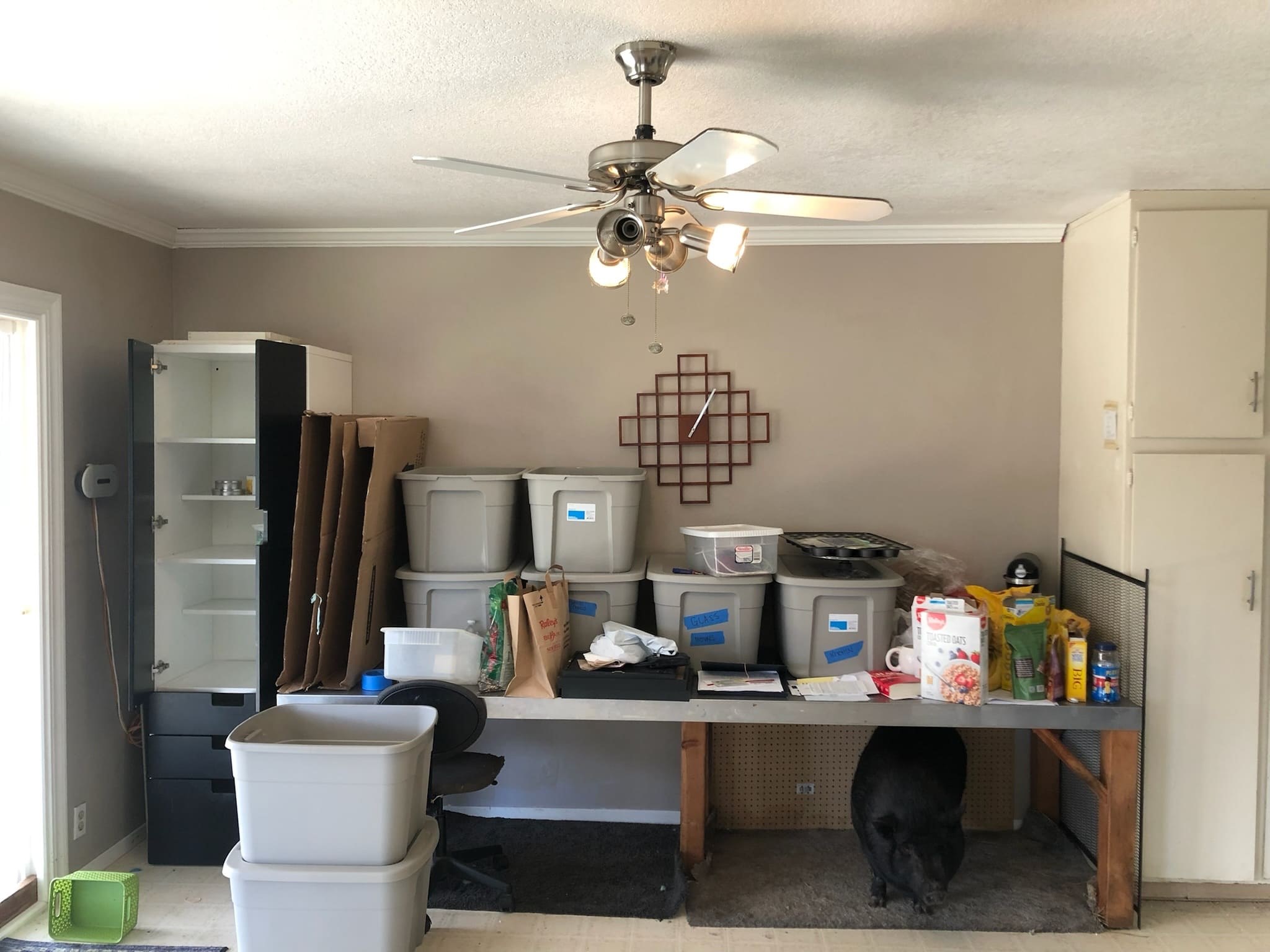
We buy houses in exactly this condition across San Jose and the Bay Area, and our own projects show the kind of property we take on. The Pig House in San Jose needed every room redone when we bought it as-is. We will work around your insurance timeline, coordinate with your lender’s loss-draft department through escrow, and close on the date that fits your claim, not the other way around. The step-by-step is on how it works, and the sell as-is page covers what "as-is" means with us.
We are not the right answer for everyone. If your policy is strong, the damage is contained, and you have the time and cash to see a rebuild through, repairing will usually net you more. We will tell you that on the phone if it is true.
Sequencing a Sale After a Fire
The order below is what protects your money.
Frequently Asked Questions
Can I sell a fire-damaged house in San Jose without repairing it?
Yes. Nothing in California law requires you to repair fire damage before selling, and houses sell in every condition. What changes is who can buy it. Many conventional and FHA lenders will not finance a house that is uninhabitable, so an unrepaired house usually sells to cash buyers or buyers using renovation loans, and at a price that reflects the work needed. You still have to disclose the fire on the Transfer Disclosure Statement, which asks directly about major damage from fire. Before you sign a purchase contract, ask your insurer in writing what selling unrepaired does to the replacement-cost portion of your claim.
If I sell my fire-damaged house, do I keep the insurance money?
Generally you keep the actual cash value payment, which is replacement cost minus depreciation, subject to your mortgage lender’s rights as a named mortgagee on the policy. The recoverable depreciation, or holdback, is different: under California Insurance Code section 2051.5, when a policy requires repair or replacement to collect full replacement cost, the insurer pays that difference after the work is done, so on a partial loss it is often forfeited if you sell unrepaired. After a total loss, section 2051.5(c) says the policy cannot deny replacement cost because you chose to buy an already-built home elsewhere instead of rebuilding, capped at the cost to rebuild at the original location. Get your insurer’s position in writing and have a California attorney or licensed public adjuster review it.
How long do I have to collect full replacement cost after a fire in California?
At least 12 months from the date the insurer makes its first actual cash value payment. California Insurance Code section 2051.5(b) prohibits a shorter time limit, raises the minimum to 36 months when the loss relates to a declared state of emergency, and requires the insurer to grant additional six-month extensions for good cause when you are acting in good faith and are delayed by things outside your control, such as permit delays or unavailable contractors. Your policy may give you longer; it cannot give you less.
Can I lower my property taxes after a house fire in Santa Clara County?
Usually, yes. Under California Revenue and Taxation Code section 170, the Santa Clara County Assessor will reassess a property damaged by fire or another misfortune when the damage is $10,000 or more, it was not the owner’s fault, and the owner applies within 12 months of the damage. Taxes for the rest of the fiscal year are then prorated at the lower, damaged value, and any overpayment is refunded. Contents do not count toward the $10,000. If you later rebuild in a like or similar manner, the Assessor states you keep your previous base year value. It is worth filing even if you plan to sell.
Do I have to disclose a past fire if the house was fully repaired?
Yes. The California Real Estate Transfer Disclosure Statement asks whether the seller is aware of major damage to the property or any of the structures from fire, earthquake, floods, or landslides, and a completed repair does not make that answer no. Selling as-is does not waive disclosure either. The best protection is documentation: attach the fire incident report, the insurer’s scope of loss, and the permits and final inspections for the repair. This is general information, not legal advice, so check your situation with a California real estate attorney.
Does a regular house fire qualify for the disaster property tax transfer rules?
Usually not. The special provisions that let an owner move a damaged home’s base year value to a replacement property apply when the Governor has proclaimed a state of disaster, which a single-house fire normally is not. The ordinary Section 170 reassessment still applies to a single-house fire. And if you are 55 or older, the regular Prop 19 rules may let you carry your assessed value to a replacement home anywhere in California without any disaster declaration.
Will Peachtree Homes buy a fire-damaged house in San Jose?
Yes. We buy fire-damaged houses as-is across San Jose and the Bay Area, with no repairs, no cleanup and no lender condition standards to meet, because we pay cash. We can work around your insurance timeline, coordinate with your mortgage servicer’s loss-draft department through escrow, and close on the date that suits your claim. If repairing will clearly net you more, we will tell you that. Call us at (408) 549-7183 with your policy and your adjuster’s estimate in front of you.