
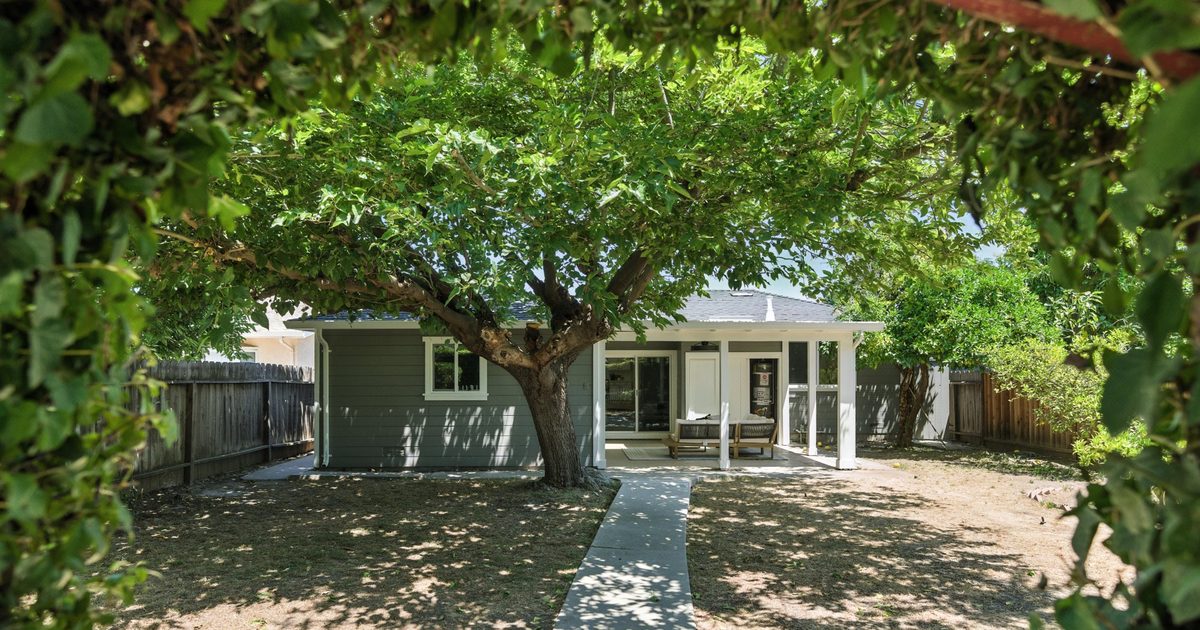
Most housing market reports are written about national trends that don't apply to San Jose, or about Chicago's suburbs that don't reflect what's happening here. San Jose is its own market — slower appreciating, more income-sensitive, more dependent on the manufacturing and healthcare sectors than on tech or finance. What's true in Austin or Phoenix has almost nothing to do with what's happening on Berryessa Road or in the East Foothills.
This guide is written specifically for Santa Clara County homeowners who want to understand what the market actually looks like right now — not what it looks like on a national real estate app that aggregates your neighborhood with completely different sub-markets.
2026 Market Snapshot: The Key Numbers
Here's where San Jose's residential market sits heading into 2025, based on Santa Clara County MLS data and observed transaction patterns across the metro area:
A 96% sale-to-list ratio means the average San Jose home sells for about 4% below asking price. That's not a distressed market — it's a balanced one where buyers have some negotiating room but sellers aren't giving away equity. Compare that to the 2021–2022 peak when many San Jose homes sold at or above asking due to COVID-driven demand compression. That frenzy is over, but the market hasn't cratered.
When national media reports on "the housing market," they're typically talking about coastal metros and Sun Belt boomtowns. San Jose never experienced the 40–60% price spikes of 2020–2022, so it also hasn't experienced the painful corrections that followed. San Jose's market is characterized by stability — which is good news for sellers who need predictability.
What Actually Drives the San Jose Real Estate Market
Understanding San Jose's market requires understanding San Jose's economy. The market doesn't move the way Chicago's does — it moves based on a different set of drivers entirely.
The Healthcare Anchor
Apple, Google, Cisco, Nvidia, Intel, and Adobe are the dominant employment anchors in Santa Clara County. Together they employ hundreds of thousands of workers across the metro area. Tech employment is highly compensated but cyclical — layoff rounds create motivated sellers, while hiring booms generate urgent relocation demand. The tech sector is the single most important driver of San Jose's housing demand at every price point.
Tech Sector Employment
Healthcare remains a significant secondary employer across Santa Clara County — Valley Medical Center, Good Samaritan, El Camino Health, and Stanford Health Care collectively employ tens of thousands of local workers. Healthcare employment is relatively recession-resistant, which provides a consistent floor under housing demand even during tech sector downturns. Healthcare-driven relocation buyers concentrate in mid-range San Jose neighborhoods and create sustained demand in the $900K–$1.3M range.
San José State University and Santa Clara University
San José State (28,000+ students in the heart of downtown) and Santa Clara University create consistent rental demand and owner-occupant demand from faculty, staff, and graduate students. The neighborhoods surrounding SJSU — South Campus, Naglee Park, and the Spartan Keyes district — see steady investor and owner-occupant interest. SCU's presence in Santa Clara shapes demand in the Bowers/El Camino corridor and adds a secondary buyer pool to northwest San Jose. University-adjacent properties have held value even in slower market periods.
Population Trends — The Honest Picture
San Jose has experienced modest population decline over the past decade — a demographic reality that limits price appreciation ceiling. The metro area's population loss is concentrated in younger age groups leaving for larger metros. What remains is a more stable, older homeowner base with lower mobility. This isn't catastrophic for housing — owners stay longer, reducing turnover — but it does mean San Jose will never be a rapidly appreciating market. Steady beats volatile for most sellers.
Neighborhood-by-Neighborhood Breakdown
The single biggest mistake San Jose sellers make is applying metro-wide statistics to their specific neighborhood. A county-wide median of $1.3M is nearly meaningless when the same number encompasses a $2M+ Willow Glen craftsman and an $850K East San Jose condo. Here's a honest breakdown by sub-market:
San Jose is effectively operating as two separate real estate markets. The northern suburbs and Rose Garden corridor function like a conventional seller's market where listing with a realtor makes sense for well-maintained homes. The city-core neighborhoods function as a cash-buyer market where conventional financing rarely clears, days on market are long, and the realistic buyer pool is investors and cash buyers. Knowing which market you're actually in changes every strategic decision you make.
Interest Rates & Inventory: The Bigger Picture
Two macro forces are shaping San Jose's market in 2025 in ways that every seller should understand.
The Rate Lock-In Effect on San Jose Inventory
Mortgage rates in the 6.5–7.5% range have created a widespread "rate lock-in" phenomenon — homeowners who refinanced at 2.8–3.5% in 2020–2021 are deeply reluctant to sell and give up their rate. In San Jose, this affects the middle and upper-middle segments most acutely. Bay Area homeowners who locked 30-year mortgages at 3% in 2021 are effectively paying $1,800–$2,800 less per month than they'd pay on a comparable home today. That financial anchor is keeping inventory artificially suppressed.
For sellers who do need to sell — due to relocation, financial hardship, divorce, or estate — this low inventory environment actually helps. Fewer competing listings means your home gets more attention. The buyers who are active despite high rates tend to be more financially qualified and serious.
New Construction Competition
North San Jose and the Berryessa corridor have seen new construction townhome and condo activity, particularly in the $900,000–$1,400,000 price range targeting tech employees. New construction directly competes with existing homes in those price ranges and can extend days on market for older homes that can't compete on features. If your home is in the $250,000–$350,000 range in North San Jose and is more than 20 years old without recent updates, expect buyers to cross-shop with new builds.
The Financing Cliff at San Jose Price Points
One dynamic in the Bay Area: jumbo loan requirements and down payment thresholds create a financing gap. Cash buyers are particularly active in homes needing significant renovation, where standard financing is difficult to secure. Properties that need full renovation often can't qualify for conventional financing, making the cash buyer pool their primary market — regardless of the property's underlying land value.
"In San Jose's lower-priced neighborhoods, the question isn't whether to use a cash buyer — it's which cash buyer to use. Conventional financing simply doesn't reach those price points."
— Jason Nesbitt, Peachtree HomesWhat This Means If You're Selling in 2026
Here's the practical takeaway for San Jose homeowners thinking about selling this year:
If Your Home Is in Willow Glen / Almaden Valley / Los Gatos in Good Condition
Spring listing makes sense. List between March and June, price it correctly based on actual comparable sales (not Zillow's Zestimate, which regularly misestimates San Jose values by 10–20%), and get a good local agent who knows the Santa Clara County MLS. The market will support a retail sale. Get a pre-listing inspection to identify issues before buyers use them as negotiating leverage.
If Your Home Is in a Mid-Tier Neighborhood (San Jose Heights, Willow Glen) with Deferred Maintenance
Run the numbers on both options before committing. Get a cash offer — it takes 24 hours and costs nothing. Then get a realtor's pricing opinion. After accounting for repairs, commissions, and carrying costs, the difference is often smaller than expected. In some cases, the cash sale nets more. We walked through this math in detail here →
If Your Home Is in East San Jose, Berryessa, or a Property Needing Significant Work
A retail listing is likely to produce frustration rather than a sale. Homes in these neighborhoods struggle with financing constraints, long days on market, and buyer skepticism. Cash buyers are your realistic market. Focus on finding a legitimate local buyer — not a national wholesaler who will tie up your property for weeks then reassign the contract — and negotiate for the best offer from within that pool.
Timing: Spring Is Real, But Not Magic
Spring does produce more buyers in San Jose — the March through June window consistently shows higher showings and faster sales. But for homes that need significant work, the season matters much less. Investors and cash buyers operate year-round. If you're planning to sell a distressed property, waiting for spring won't meaningfully improve your result.
Get a Free Cash Offer on Your San Jose Home
Understand exactly what a cash sale would net you — use it to benchmark against listing. No obligation, no pressure. Just real numbers in 24 hours.
The Distressed Market: A Separate Conversation
About 25–30% of Santa Clara County residential transactions involve distressed properties — homes in foreclosure, estate sales, properties with significant deferred maintenance, and investor flips. This segment operates almost entirely outside the MLS and the conventional market metrics above.
In the distressed segment, what matters is not days on market or sale-to-list ratios — it's finding a buyer who can close quickly, absorb the condition, and handle the title complexity that often accompanies distressed properties. San Jose has an active investor community, but quality varies enormously. The key questions when evaluating any cash buyer for a distressed San Jose property:
Frequently Asked Questions
Is San Jose CA a buyer's or seller's market in 2026?
It depends entirely on which part of San Jose. Willow Glen, Almaden Valley, and Los Gatos lean seller's market — low inventory, faster days on market, prices above asking. East San Jose and Berryessa are more balanced (for the limited conventional buyers who can finance there). The city as a whole sits roughly balanced, with stronger conditions in the suburbs and softer conditions in the core.
What is the median home price in San Jose CA in 2026?
Santa Clara County's median sale price sits around $1.28M–$1.38M as of early 2025, with significant neighborhood variation — from $800K for entry-level East San Jose condos to $3M+ in premium Almaden Valley and Saratoga properties. Your neighborhood's comparable sales are far more relevant than the county median for pricing your home.
How long does it take to sell a house in San Jose?
Median days on market for properly priced, average-condition San Jose homes runs 45–60 days. Move-in ready homes in North San Jose go in 18–35 days. Homes in the East Foothills or needing significant work can sit 90–180+ days or may not sell via traditional listing at all. A cash buyer closes in 7–21 days regardless of neighborhood or condition.
Are home prices dropping in San Jose in 2026?
No significant drop. San Jose's market is showing modest appreciation of 2–4% year over year in the stronger sub-markets, with flat-to-slightly-declining values in weaker neighborhoods. The metro never experienced extreme appreciation, so it also hasn't experienced the corrections seen in overheated Sun Belt markets.
When is the best time of year to sell a house in San Jose?
Spring — March through June — consistently produces the most active buyer pool in San Jose. School-year timing, tax refund deployment, and weather all contribute. That said, for distressed properties or homes in cash-buyer markets, season matters very little. Investors buy in January just as readily as in May.
What neighborhoods in San Jose are best for selling?
Willow Glen, Almaden Valley, and Los Gatos consistently offer the strongest selling conditions — fastest days on market, most competitive offers, and the most conventional financing buyers. Los Altos and Palo Alto (Santa Clara County, adjacent to San Jose) also outperform the city core. East Foothills and South Side present the most challenging conditions for retail sales.